How Big Is a Uterus?
How big is a uterus? Learn how big a uterus really is, how its size changes, what’s normal, and when to see a doctor.
If you’ve ever wondered “How big is a uterus, really?”—you’re not alone. The uterus is one of the most fascinating organs in the body, constantly changing in size throughout your life and menstrual cycle. Even though it plays a central role in periods, fertility, and pregnancy, most people don’t know what it actually looks like or how big it is.
In this guide, we’ll break down average uterus size, how it changes with hormones and life stages, and when size differences might matter.
What Is the Uterus?
The uterus is a pear-shaped, muscular organ located in the pelvis, between the bladder and the rectum. Its main jobs include:
-
Housing and nourishing a pregnancy
-
Shedding the lining each menstrual cycle
-
Supporting pelvic structures
Even when it’s not pregnant, the uterus is incredibly active, responding to hormones every single month.
So… How Big Is a Uterus?
Average Uterus Size (Never Pregnant)
In someone who has never been pregnant (nulliparous), the uterus is typically:
-
Length: 7–8 cm (about 3 inches)
-
Width: 4–5 cm (about 1.6–2 inches)
-
Thickness: 2.5–3 cm (about 1 inch)
-
Weight: 30–60 grams
👉 In everyday terms:
A uterus is roughly the size of a small pear or your closed fist.
Uterus Size After Pregnancy
In someone who has been pregnant before (parous), the uterus tends to be bigger:
-
Length: 8–10 cm
-
Width: 5–6 cm
-
Thickness: 3–4 cm
That’s because pregnancy stretches the uterine muscles, and although it shrinks afterward, it rarely returns to the exact original size.
👉 Everyday comparison:
About the size of a medium pear, a small avocado, or your open palm.
How Uterus Size Changes Throughout Life
1. Before Puberty
The uterus is very small—only 2–3 cm. Hormones haven’t yet stimulated its growth.
2. Reproductive Years
Estrogen causes the uterus to reach its full size.
It also subtly changes size during each menstrual cycle:
-
Follicular phase: Smaller
-
Luteal phase: Slightly enlarged due to higher progesterone
3. After Menopause
Without estrogen, the uterus shrinks:
-
Down to about 4–6 cm in length
-
Endometrial lining becomes very thin
This is completely normal and expected.
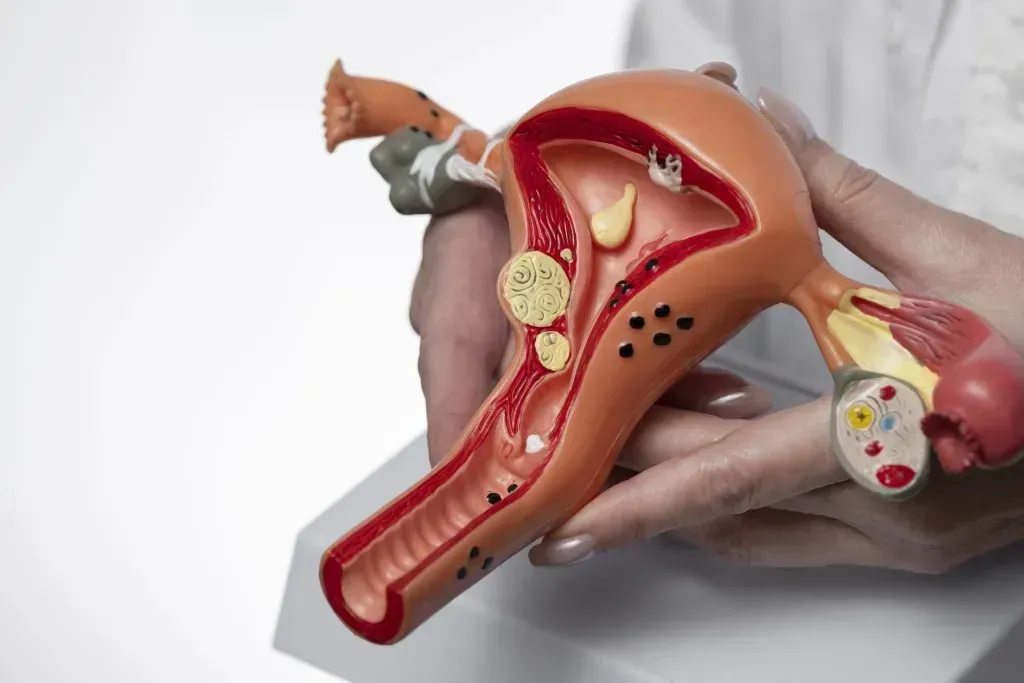
What Can Make a Uterus Larger or Smaller?
Common Reasons the Uterus May Be Larger:
-
Fibroids
-
Adenomyosis
-
Pregnancy or recent pregnancy
-
Endometrial hyperplasia
-
Hormonal imbalance
Reasons It May Be Smaller:
-
Certain hormonal conditions
-
Congenital differences (born with a smaller uterus)
Size alone rarely indicates a problem—but sudden changes or symptoms like heavy bleeding, severe cramps, or pelvic pressure should be checked by a gynecologist.
Does Uterus Size Affect Fertility?
Usually, no—a uterus can vary in size without affecting fertility.
But extremely enlarged or irregularly shaped uteri (often due to fibroids or malformations) may impact implantation or period flow.
How Do Doctors Measure Uterus Size?
A gynecologist may use:
-
Pelvic exam
-
Transvaginal ultrasound (most accurate)
-
Abdominal ultrasound
-
MRI (in complex cases)
Ultrasound measurements typically include:
-
Length
-
Anteroposterior diameter
-
Transverse diameter
-
Overall volume
How the Belle Health App Can Help You Track Symptoms
Your cycle and symptoms can tell you a lot about your reproductive health—including uterine changes like fibroids or hormonal shifts.
With the Belle Health App, you can track:
-
Period flow
-
Cramping levels
-
Cycle patterns
-
Bloating
-
Pelvic pain
-
Hormonal symptoms
This gives you a clear picture to bring to your gynecologist if you ever need an evaluation.
Download the Belle App
Signs Your Uterus Size Might Need Checking
Contact a healthcare provider if you have:
-
Very heavy periods
-
Severe cramps
-
Pain during sex
-
Feeling of pelvic pressure or fullness
-
Unexpected bloating
-
Difficulty urinating
-
Fertility concerns
These symptoms don’t always mean something is wrong, but they’re worth evaluating.
FAQ: How Big Is a Uterus?
Is the uterus the same size for everyone?
No. Uterus size varies depending on age, hormones, pregnancy history, and individual anatomy. Many healthy people have uteri that fall above or below the “average” range.
Does my uterus get bigger during my period?
Yes, slightly. Hormonal changes—especially progesterone—can cause temporary swelling in the luteal phase and early period.
Can a large uterus be normal?
Yes. People who have been pregnant often have larger uteri. Some variations are perfectly normal unless you also have symptoms.
What makes the uterus enlarge?
Common causes include pregnancy, fibroids, adenomyosis, hormonal imbalance, or thickening of the uterine lining.
Does uterus size affect period pain?
Not usually. But conditions that change uterine size—like fibroids or adenomyosis—can increase cramping or heavy bleeding.