How is Endometriosis Diagnosed? The Real Diagnostic Pathway
How is endometriosis diagnosed: symptom diary, pelvic exam, ultrasound, MRI, laparoscopy. ESHRE 2022 update. Tips to shorten the diagnostic delay.
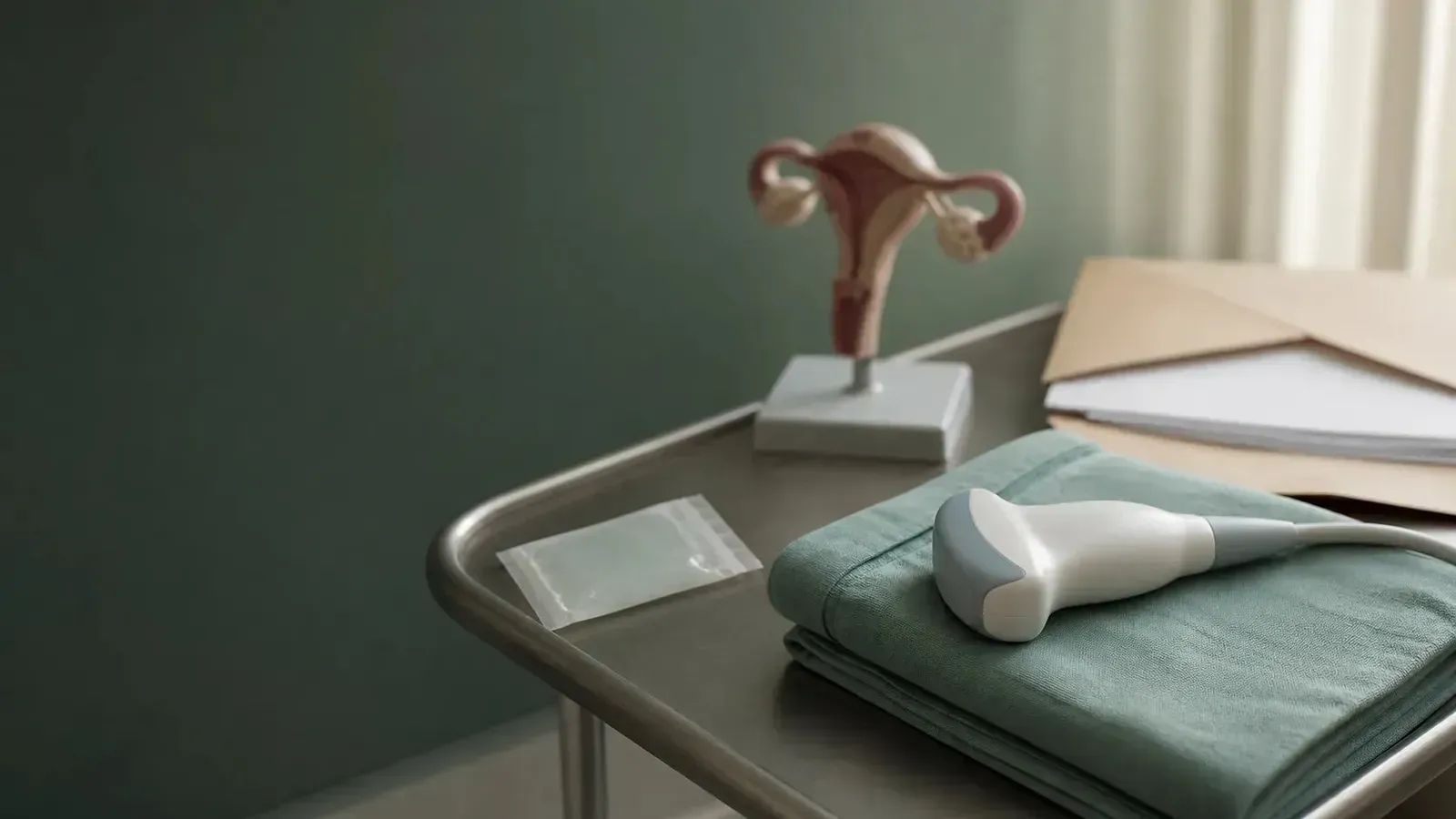
How is endometriosis diagnosed? The honest answer: the path is longer than it should be. On average it takes 7-10 years from first symptom to diagnosis — not because of medical complexity, but because severe period pain has been normalized for generations. This article explains the diagnostic pathway step by step and shows how you can shorten the process yourself.
If you’re still figuring out whether your symptoms match endometriosis, start with our complete symptom list or the free symptom screener. For the bigger picture see What is Endometriosis?.
Step 1: Clinical history and symptom diary
The most important first step isn’t a machine — it’s a conversation, prepared with data. Bring at least two to three cycles of tracked symptoms: pain type, location, intensity (1-10 scale), relationship to cycle, activities affected, what helps and what doesn’t. This data dramatically accelerates the diagnostic process. Doctors who see structured symptom data investigate endometriosis far faster than when given a vague description.
Step 2: Pelvic examination
During the pelvic exam, the doctor checks for signs that suggest endometriosis: tenderness in the posterior vaginal fornix, palpable nodules on the rectovaginal septum, enlarged or tender ovaries, reduced uterine mobility from adhesions. The exam alone is not enough to diagnose endometriosis — many people with the condition have a completely unremarkable physical exam. But it provides important clues and helps rule out other conditions.
Step 3: Transvaginal ultrasound
Transvaginal ultrasound is the first imaging step. It’s quick, widely available, and good at detecting endometriomas (“chocolate cysts” on the ovaries) and deep infiltrating endometriosis in the bowel, bladder, or behind the uterus — when performed by an experienced sonographer. What it misses: superficial peritoneal lesions and adhesions.
Critical point: a normal ultrasound does not rule out endometriosis. If symptoms strongly suggest endometriosis, the diagnostic workup should continue even with a clean ultrasound.
Step 4: MRI
MRI comes into play when deep infiltrating endometriosis is suspected (bowel or bladder involvement), when surgery is being planned and the operative field needs to be mapped, or when adenomyosis needs to be ruled in or out. MRI isn’t standard for every suspected case, but it’s essential for surgical planning in severe endometriosis.
Step 5: Laparoscopy
Laparoscopy was long called the “gold standard“ because it’s the only way to directly see endometriotic tissue, take a biopsy, and confirm histologically. Today it’s used more selectively: current ESHRE guidelines (2022) allow a clinical diagnosis without laparoscopy if symptoms and imaging are consistent. This is a meaningful shift, because it allows earlier treatment.
Laparoscopy is typically recommended when symptoms aren’t adequately controlled by hormonal therapy, when surgical treatment makes medical sense, when there’s a concrete fertility goal (combining diagnosis and surgical treatment of lesions can improve conception rates), or when the diagnosis can’t be made clearly any other way.
How to shorten the diagnostic journey
Five practical moves that demonstrably accelerate diagnosis:
- Start symptom tracking immediately — don’t wait until the first appointment
- Take the symptom screener: the free 5-minute test helps you map your pattern structurally and prepares you for the appointment
- Ask directly: “Could this be endometriosis?” — framing the question explicitly lowers the threshold for the doctor to consider it
- Request a referral to an endometriosis-specialized center if your GP or general gynecologist is dismissive
- Get a second opinion when symptoms aren’t being taken seriously — the first consultation does not define your diagnostic path
What happens after diagnosis?
After diagnosis comes the treatment decision. It depends on symptom severity, disease stage, life circumstances, and any fertility goals. The overview is in Endometriosis Treatment. Critically: a diagnosis does not automatically mean surgery. For many, hormonal therapy is the first choice.
Frequently asked questions
Can endometriosis be diagnosed without surgery?
Yes — current ESHRE 2022 guidelines support clinical diagnosis without laparoscopy when symptoms and imaging are consistent. The histological confirmation that was once required is no longer a prerequisite for starting treatment.
How can endometriosis be detected if the ultrasound is normal?
A normal ultrasound doesn’t rule out endometriosis. Superficial peritoneal lesions are typically invisible on ultrasound. When symptoms strongly suggest endometriosis, further workup (MRI or laparoscopy) is appropriate — or a clinical diagnosis can be made on history alone.
How long does diagnosis typically take?
Studies show 7-10 years from first symptom to diagnosis. This delay isn’t from medical complexity but predominantly from the normalization of severe period pain. Structured symptom tracking and targeted referral to specialized centers can significantly shorten this timeline.
Who diagnoses endometriosis? My GP or a gynecologist?
A GP can raise the suspicion and start the initial workup. The actual diagnosis is usually made in gynecology, ideally in an endometriosis-specialized center. If your GP is hesitant, ask specifically for a referral to a gynecologist experienced with endometriosis.
Can a blood test diagnose endometriosis?
Not reliably. CA-125 is sometimes elevated in moderate to severe endometriosis but is not specific or sensitive enough for diagnosis. Newer biomarkers are being researched, but none are clinically validated as standalone diagnostic tools. Diagnosis still relies on history, exam, imaging, and (in select cases) laparoscopy.
Sources
- European Society of Human Reproduction and Embryology (ESHRE). Endometriosis Guideline. 2022.
- NICE Clinical Guideline NG73. Endometriosis: diagnosis and management. 2017 (Update 2024).
- Agarwal SK et al. Clinical diagnosis of endometriosis: a call to action. Am J Obstet Gynecol 2019;220:354.e1-12.
- Nnoaham KE et al. Impact of endometriosis on quality of life and work productivity. Fertil Steril 2011;96(2):366-373.