When Does Postpartum Hair Loss Stop? What’s Normal & What You Can Do
Postpartum hair loss usually starts around 3 months after birth and stops by 12 months. Learn when does postpartum hair loss stop and more!
So, when does postpartum hair loss stop? And is there anything you can do to make it better or shorter? Let’s talk through the timeline, what causes it, and how to care for your hair during this transitional phase.
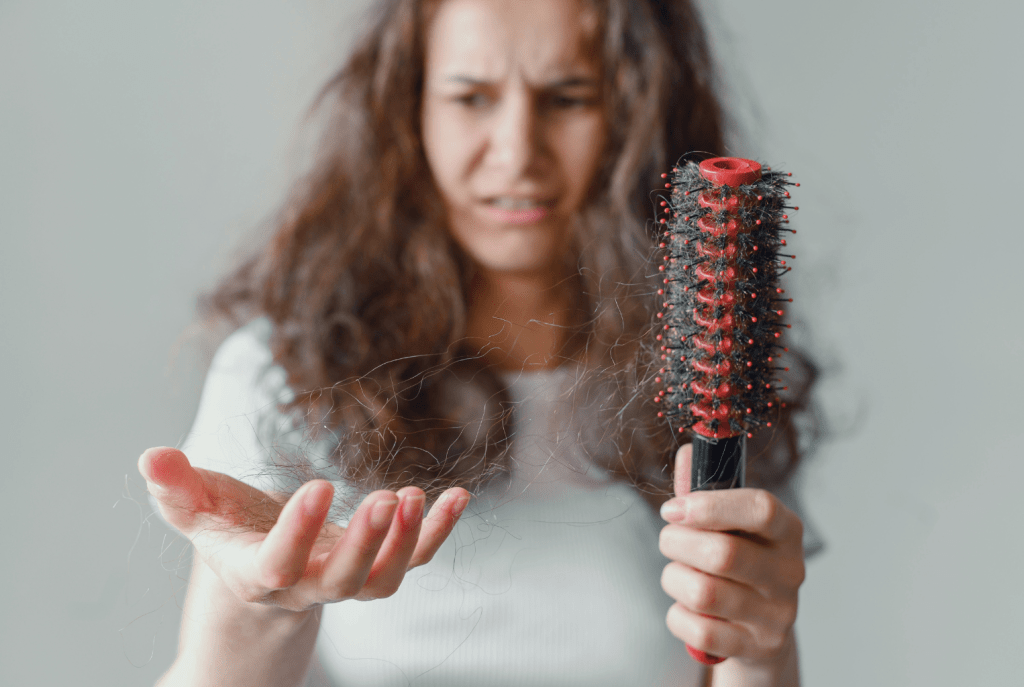
If your hair started shedding in clumps a few months after giving birth, you’re not alone. Postpartum hair loss is a completely normal part of the postpartum journey—but that doesn’t make it any less alarming when your shower drain looks like a small animal crawled out of it.
How Long Does Postpartum Anxiety Last? Timeline and Treatment
Why Does Hair Fall Out After Pregnancy?
During pregnancy, your body is flooded with hormones—especially estrogen—that put your hair growth into overdrive. Most women experience thicker, shinier, fuller hair during pregnancy because fewer hairs enter the shedding phase.
After birth, however, hormone levels drop quickly. Estrogen and progesterone return to pre-pregnancy levels, and all that extra hair your body was “holding on to” starts to shed at once. This is known as telogen effluvium, a temporary form of hair loss triggered by stress or hormonal shifts.
When Does Postpartum Hair Loss Start?
Most women begin to notice hair loss around 2 to 4 months postpartum. This is right around the time your body has adjusted to its new hormonal baseline.
Some people experience more subtle thinning, while others find hair falling out in noticeable clumps. Either way, it’s likely temporary—and it doesn’t mean anything is wrong with you or your health.
So, When Does Postpartum Hair Loss Stop?
In most cases, postpartum hair loss stops between 6 to 12 months after childbirth. By the time your baby is blowing out the candles on their first birthday cake, your hair should be well on its way to returning to its normal growth cycle.
This timeline can vary:
-
If you’re breastfeeding, hormone shifts may happen more gradually, potentially extending the shedding period.
-
If you’re experiencing chronic stress, nutritional deficiencies, or a thyroid imbalance, hair loss might persist longer and warrant a check-up with your doctor.
How Tracking Can Help With Postpartum Hair Loss
Navigating postpartum changes—like unexpected hair loss—can feel overwhelming. That’s where tracking comes in. By keeping tabs on when the shedding starts, how much you’re losing, and other symptoms like fatigue, mood shifts, or changes in your cycle, you can spot patterns and feel more in control. It also makes it easier to bring up concerns with your doctor.
The Belle App makes this simple. You can track your cycle, log postpartum symptoms, and access a toolbox full of practical tips to manage what you’re feeling in the moment. Seeing even small improvements over time can be incredibly reassuring—and a reminder that you’re moving forward.
Can You Prevent Postpartum Hair Loss?
You can’t prevent postpartum hair loss entirely—remember, it’s a hormonal response—but you can support healthy regrowth and minimize damage during this time.
Tips to support your hair:
-
Nourish from within: Eat a balanced diet rich in protein, iron, Vitamin D, and omega-3 fatty acids.
-
Continue your prenatal vitamins (with your doctor’s approval), especially if you’re breastfeeding.
-
Be gentle: Skip tight hairstyles, minimize heat styling, and use a wide-toothed comb to avoid breakage.
-
Try volumizing or biotin-infused hair products designed to support thinning hair.
When to Talk to a Doctor
If your hair loss is accompanied by fatigue, dry skin, irregular periods, or lasts beyond a year postpartum, it’s worth checking in with your healthcare provider. Thyroid issues or iron deficiency are common postpartum concerns that can contribute to prolonged hair shedding.
Final Thoughts
While postpartum hair loss can feel shocking or even distressing, it’s a completely normal part of the healing and hormone-balancing process after pregnancy. With a little patience and self-care, your hair will begin to regrow, and you’ll start to feel like yourself again.
If you’re still asking “when does hair loss postpartum stop,” know this: Your body is recalibrating, and hair shedding is one of its ways of getting back to baseline. Be kind to yourself—and your hair. You’ve been through a lot.
FAQs About Postpartum Hair Loss
When does hair loss stop postpartum?
Postpartum hair loss typically stops between 6 to 12 months after giving birth. Most women see peak shedding around 3 to 4 months postpartum and notice improvement by their baby’s first birthday.
When does postpartum hair loss start and stop?
Hair shedding usually starts 2 to 4 months postpartum and ends by 12 months postpartum. Some people experience only mild thinning, while others notice more dramatic shedding before regrowth begins.
Is it normal to still have hair loss after 1 year postpartum?
Occasional shedding is still possible after a year, especially if other factors are involved—like nutritional deficiencies, stress, or thyroid conditions. If your hair hasn’t improved by 12 months postpartum, talk to a healthcare provider for guidance.