Hormone Tracking for Women: How Understanding Your Cycle Changes Everything
Hormone tracking helps women understand their moods, energy, and cycles. Learn how the Belle App makes it easy and empowering.
Why Hormone Tracking Matters
Women’s hormones fluctuate throughout the month — influencing energy, mood, sleep, skin, sex drive, and focus. Yet, most of us were never taught how to read these signals.
Tracking your hormones helps you understand your body, not fight against it. Whether you’re managing PMS, planning pregnancy, or just aiming to feel more balanced, hormone awareness gives you control.
That’s where the Belle App comes in.
Belle helps you translate daily symptoms, energy changes, and emotional shifts into clear hormonal patterns — so you can live in sync with your body instead of guessing what’s happening.
Read more: Cycle Syncing: Living in Tune with Your Menstrual Cycle
How Hormone Fluctuations Affect You
Your cycle is divided into four hormonal phases:
1. Menstrual Phase (Days 1–5)
Estrogen and progesterone drop, triggering your period. Energy may be low, and rest becomes vital.
2. Follicular Phase (Days 6–14)
Estrogen rises — bringing focus, optimism, and higher energy. Skin often looks brighter, and workouts feel easier.
3. Ovulation Phase (Around Day 14)
A short surge in luteinizing hormone (LH) triggers ovulation. Libido peaks, and communication and confidence rise.
4. Luteal Phase (Days 15–28)
Progesterone dominates. Some women feel calmer, but others may experience PMS symptoms like bloating, mood dips, or cravings.
By tracking these shifts, you can predict patterns — and the Belle App turns that knowledge into daily insights you can actually use.
How the Belle App Helps You Track Hormones
1. Visual Cycle Mapping
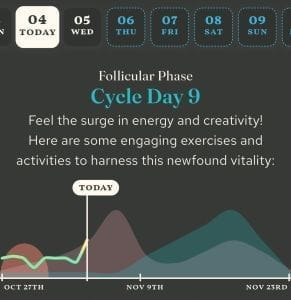
Belle transforms your daily logs into a visual map of your hormonal phases. You can see when estrogen, progesterone, and other key hormones are likely rising or falling.
2. Personalized Insights
Instead of generic advice, Belle gives personalized tips — for example, when your body needs rest versus when you’re at your energetic peak.
3. Symptom Tracking That Makes Sense
You can log everything from mood swings and cramps to sleep, cravings, and libido. Over time, Belle helps you identify hormonal triggers behind those symptoms.
4. Cycle Syncing Made Simple
Belle teaches you how to align workouts, meals, and routines with your cycle — so you can work with your hormones, not against them.
5. Empowerment Through Education
Every feature in Belle is designed to build understanding, not just collect data. You’ll learn how your hormones shape your life and how to use that insight to your advantage.
Why Hormone Tracking Isn’t Just for Fertility
Hormone tracking isn’t only for people trying to conceive. It’s for:
-
Managing PMS or PMDD
-
Understanding mood changes or anxiety
-
Tracking energy and productivity patterns
-
Navigating perimenopause or hormonal shifts
-
Building confidence in how your body works
The Belle App helps you recognize your body’s natural rhythm, empowering you to live with more awareness and self-trust every day.
Key Takeaways
-
Hormones affect every aspect of a woman’s wellbeing — not just her period.
-
Tracking them helps you understand your moods, energy, and body patterns.
-
The Belle App simplifies hormone tracking with science-backed insights and daily logs that adapt to your cycle.
-
When you understand your hormones, you unlock a deeper connection with yourself.
FAQs
Why should women track their hormones?
Hormone tracking helps you understand how mood, energy, and body changes relate to your cycle, allowing you to make informed choices about your health.
How does the Belle App track hormones?
Belle uses your cycle data and symptoms to map hormonal patterns across your month, showing how estrogen, progesterone, and other hormones shift daily.
Can hormone tracking help with PMS or mood changes?
Yes. Tracking helps identify hormonal triggers behind PMS, low energy, or mood dips, so you can manage symptoms proactively.