Best Electrolytes for POTS
Discover the best electrolytes for POTS. Compare supplements, sodium needs, recipes, and tips to manage symptoms through hydration.
What’s the best electrolytes for POTS? Living with Postural Orthostatic Tachycardia Syndrome (POTS) means navigating a range of symptoms — dizziness, fatigue, rapid heartbeat, and lightheadedness, especially when standing. One of the most widely recommended non-pharmacological strategies for symptom management is electrolyte supplementation, especially sodium. But which electrolyte supplements are best for POTS, and why?
This article dives deep into:
-
Why electrolytes matter in POTS
-
How much sodium and fluid are needed
-
Best electrolyte supplement brands (ranked by value, sodium content, and use case)
-
DIY electrolyte recipes
-
Science-backed recommendations on salt, sugar, and co-factors like potassium and magnesium
What is POTS and Why Electrolytes Matter
POTS is a form of dysautonomia that affects blood flow, causing the autonomic nervous system to struggle in regulating blood volume and blood pressure. A core issue in many POTS patients is hypovolemia (low blood volume), which leads to symptoms such as:
-
Dizziness or lightheadedness
-
Rapid heart rate upon standing
-
Fatigue and brain fog
-
Nausea
-
Fainting
Electrolytes & Fluid Balance
Electrolytes are electrically charged minerals — sodium, potassium, magnesium, chloride, calcium — that regulate nerve impulses, muscle function, and fluid balance. In POTS:
-
Sodium helps the body retain water, thereby increasing plasma volume.
-
Potassium works in opposition to sodium and is essential for nerve and heart function.
-
Magnesium supports cellular hydration, nerve conduction, and muscle control.
-
Chloride and calcium also support blood volume and muscle function.
Recommended Salt & Water Intake for POTS
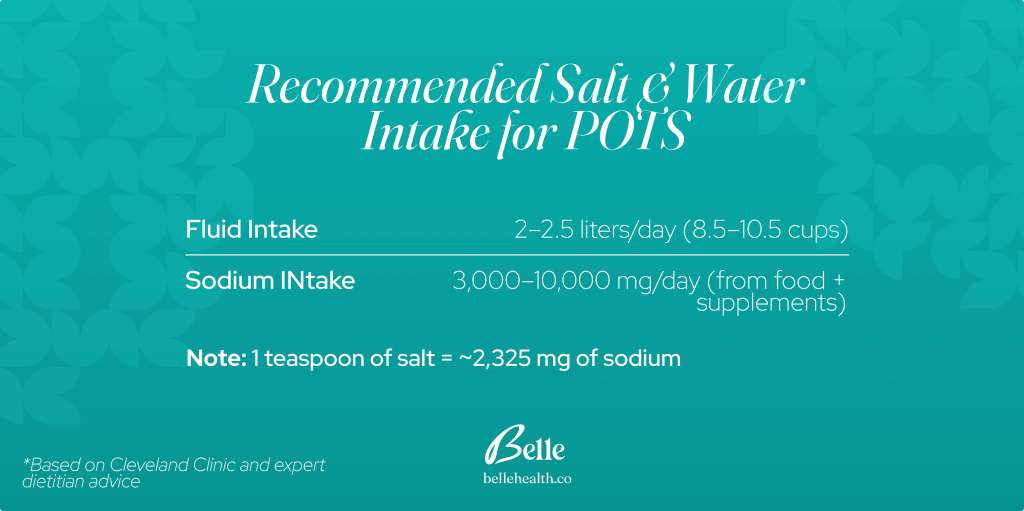
Consult your doctor before drastically increasing sodium.
Best Electrolytes for POTS
The ideal POTS supplement should include:
-
≥ 500 mg sodium per serving
-
Moderate potassium (100–200 mg)
-
Optional: magnesium (30–60 mg)
-
Optional: small amount of glucose (1–2g) to aid absorption
-
Low or no added sugar, unless dealing with dehydration or low caloric intake
-
No artificial colors or additives (especially important for those with MCAS or GI sensitivities)
Top Electrolyte Supplements for POTS (Comparison Table)
| Brand | Sodium (mg) | Potassium (mg) | Magnesium (mg) | Sugar (g) | Price per 500mg sodium (USD) | Best for |
|---|---|---|---|---|---|---|
| LMNT | 1000 | 200 | 60 | 0 | $0.75 | High sodium, sugar-free option |
| Vitassium Capsules | 500 | 100 | 0 | 0 | $0.40 | Capsules for sensitive stomachs |
| SaltStick Caps | 215 | 63 | 22 | 0 | $0.22 | Balanced for active users |
| Redmond ReLyte | 810 | 400 | 60 | 0 | $0.46 | High potassium and real salt |
| Liquid IV | 510 | 380 | Small | 11 | $1.53 | For those needing glucose + electrolytes |
| DripDrop ORS | 670 | 380 | 40 | 14 | $1.09 | Severe dehydration cases |
| Pedialyte Sport | 650 | 370 | 40 | 7 | $1.57 | Flavorful hydration + sugar |
| Catalyte (Thorne) | 485 | Moderate | 30+ | <1 | $0.77 | For MTHFR or complex needs |
| Buoy Drops | 50 | 15 | Trace | 0 | $3.30 | Customizable but low sodium |
Special Considerations
Electrolyte Ratios and Co-Factors
-
Sodium:Potassium Ratio: No fixed ratio, but avoid excessive sodium without sufficient potassium — the two work together to maintain balance.
-
Magnesium and Calcium: Needed for muscle and nerve function. High sodium intake can increase calcium loss, so monitor bone health over time.
Sugar in Electrolyte Supplements
-
Small amounts of sugar (glucose or dextrose) aid sodium absorption in the gut.
-
However, most products include more for taste than function.
-
Those with insulin sensitivity or MCAS may prefer sugar-free versions like LMNT or Vitassium.
Intravenous (IV) Fluids
-
IV saline may offer short-term relief in extreme cases.
-
There’s no clinical consensus supporting regular IV fluids for POTS outside of acute care settings.
-
Long-term IV use may increase risks in EDS patients due to fragile veins.
Final Thoughts: Convenience vs. Cost
Most commercial electrolyte supplements are table salt + potassium + flavor with fancy branding. The markup is for convenience, taste, and portability, not necessarily efficacy.
-
If you’re on a budget: Use DIY electrolyte mixes with real salt, potassium chloride (e.g., Nu-Salt), and water.
-
If you need convenience or travel often: LMNT, Vitassium, or Redmond ReLyte offer high sodium without unnecessary fillers.
-
Watch for flavors, additives, and sugar if you have MCAS or GI issues.
How much salt should I take for POTS?
Most guidelines recommend 3,000–10,000 mg of sodium per day. Start at the lower end and monitor symptoms under your provider’s guidance.
Can too much sodium be harmful?
Yes — especially for individuals with high blood pressure, kidney issues, or certain heart conditions. Always discuss intake with your healthcare team.
Is sugar necessary for electrolyte absorption?
Not always. It helps in oral rehydration, but for general maintenance, it’s often not essential if you’re eating normally.
Tracking POTS and Dysautonomia Patterns With a Smart Ring
Electrolytes and fluids are easier to fine-tune when you can see how your body responds over time. Because Belle Ring sits on your finger and samples continuously through the night and day, it can make day-to-day trends easier to notice. It is a wellness and wellbeing tracker, not a medical device: it follows patterns and does not diagnose POTS, dysautonomia, or any other condition.
Signals many women with POTS find useful to follow as trends include:
- Resting heart rate — POTS is defined by heart-rate changes on standing, so a longer view of your resting heart-rate trend can add helpful context to a conversation with your clinician.
- Heart rate variability (HRV) — a rough window into autonomic balance and recovery. See HRV for women for what the numbers mean.
- Skin temperature, SpO2, sleep, and stress trends — useful for spotting rough nights, payback days, and how hydration or sodium changes line up with how you feel.
Pairing ring trends with a simple intake log — fluids, sodium, salty snacks, and electrolyte servings — can help you and your care team see what is actually moving the needle. For a structured way to check your own numbers, see how to do a POTS test at home, and pair electrolytes with other practical supports like compression socks for POTS.
Related POTS and dysautonomia resources
- Belle Ring for POTS
- Belle Ring for dysautonomia
- Belle Ring for chronic illness
- How Belle handles your health data
Can a smart ring help me manage POTS?
A smart ring can’t treat or diagnose POTS, but it can help you follow trends in resting heart rate, HRV, skin temperature, SpO2, sleep, and stress over time. Many people use those patterns alongside an electrolyte and symptom log to have more concrete conversations with their clinician.
Does a smart ring replace a standing or heart-rate test for POTS?
No. A wearable shows general trends, not a diagnosis. A POTS evaluation still relies on clinical testing such as a supervised standing or tilt-table test. Use ring data as added context, not as a substitute for medical assessment.
Belle Ring is a wellness and wellbeing tracker, not a medical device. It tracks trends in signals such as sleep, skin temperature, resting heart rate, HRV, SpO2, and stress, and does not diagnose, treat, cure, or prevent POTS, dysautonomia, or any other condition. Increasing sodium and fluids can affect blood pressure and other health conditions, so talk with a qualified clinician before making significant changes — and seek urgent care for red-flag symptoms such as fainting, chest pain, or severe shortness of breath.