Belle Ring for ADHD: Can a Smart Ring Help You Stay Focused and Regulated?
Explore how the Belle smart ring supports ADHD management in women by tracking sleep, stress, and routines to improve focus and wellbeing.
Attention Deficit Hyperactivity Disorder (ADHD) isn’t just about kids fidgeting in classrooms – it affects millions of adults, many of them women, in their daily lives. Common ADHD challenges such as difficulty focusing, irregular sleep, heightened anxiety, and trouble sticking to routines can make work and home life feel chaotic. If you’re an adult (especially a woman) with ADHD, you might have developed an arsenal of tools to cope – planners, reminder apps, alarms, coffee (lots of coffee!). But one emerging tool you may not have considered is a smart ring for ADHD management. Yes, the same kind of ring that tracks your sleep and heart rate could also help you stay more focused and regulated. In this article, we explore how the Belle Ring – a sleek wearable packed with health sensors – might support adults with ADHD in understanding their patterns, maintaining routines, and even avoiding burnout. It’s ADHD wearable tech designed not just for fitness buffs, but for people looking to bring a bit more balance and insight to their neurodivergent brains.
ADHD in Adults (and Why Women Benefit from Tech Support)
ADHD often manifests in difficulties with attention, executive function, and self-regulation. You might jump from task to task, lose track of time, or hyperfocus for hours and then crash. For women with ADHD, the condition has long been underdiagnosed or misunderstood – partly because women tend to present more inattentively and because hormonal fluctuations can exacerbate symptoms. For instance, many women report their ADHD symptoms intensify in the days before their period due to shifting estrogen and progesterone levels. This can mean a double whammy of focus issues and mood swings at certain times of the month.
The cornerstone of ADHD management often lies in creating external structures: reminders, schedules, consistent routines, and feedback loops that keep one on track. This is precisely why wearables like smartwatches have become life-savers for some people with ADHD – they provide gentle taps, alarms, and data that serve as external guides. A smart ring operates on similar principles, albeit a bit more quietly (no loud alarms, but lots of useful data). Worn on your finger, it continuously collects information about your body and behaviors, helping make the invisible aspects of your day (like your physiological stress or the quality of your sleep) visible. As one tech podcast put it, wearable technology is transforming ADHD treatment by delivering personalized data in real time, empowering people with ADHD to manage their symptoms more effectively. In short, knowledge is power – and a smart ring can feed you knowledge about yourself, effortlessly.
For women who often juggle ADHD alongside complex schedules and hormonal cycles, having a steady stream of insights from a device like the Belle Ring can be especially valuable. It’s like having a little coach on your finger, reminding you to pay attention to self-care basics that are easy to overlook when you’re impulsively diving into the next project or crisis.
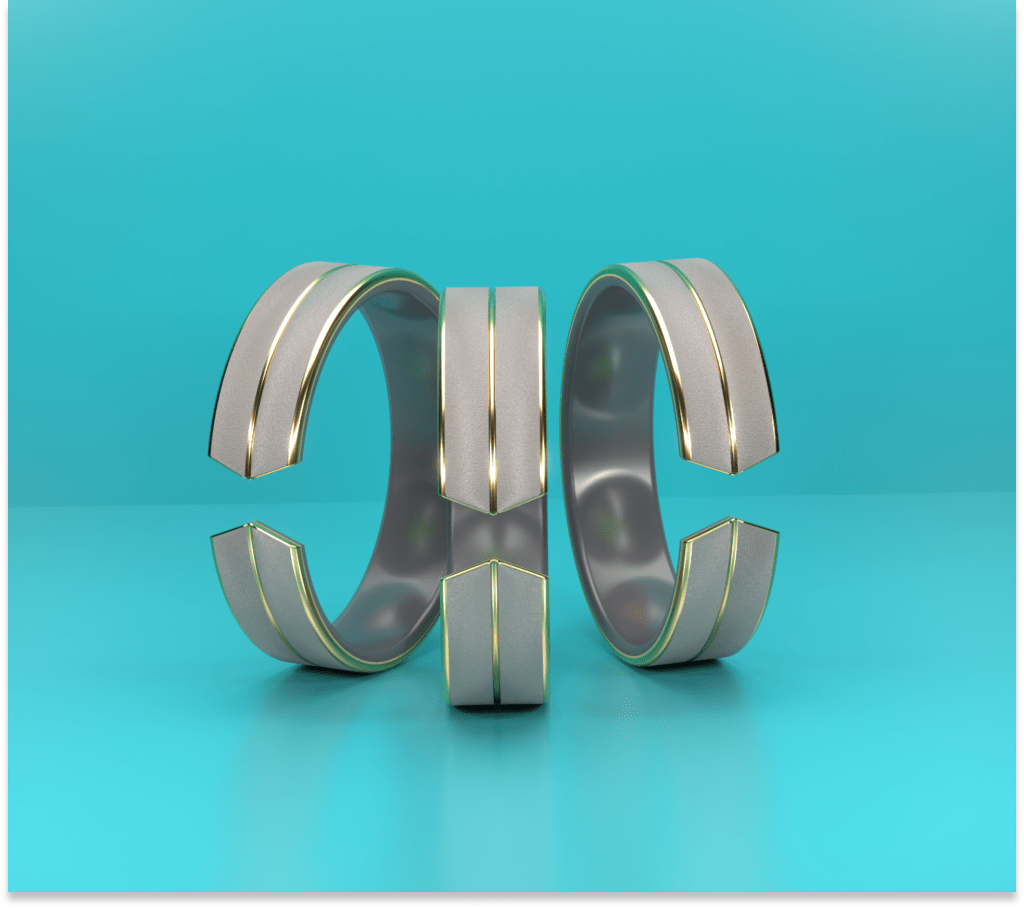
How Can a Smart Ring Help You Stay Focused and Regulated?
The Belle Ring isn’t a magic cure for ADHD (to be clear, no wearable is going to make symptoms vanish). However, it can act as a supportive tool in your overall strategy to improve focus, mood, and routine. Here are several ways this ADHD wearable tech can make a difference in day-to-day life:
- Sleep Tracking for Better Brain Function: Few things wreak havoc on ADHD symptoms like poor sleep. Lack of sleep can sharply increase distractibility, irritability, and cognitive fog in anyone – and especially in those with ADHD. In fact, proper sleep hygiene is so crucial that when adults with ADHD start improving their sleep, they often see significant gains in attention and patience. Belle Ring’s sleep tracker monitors how long and how well you sleep each night, providing insights into your sleep patterns. Are you tossing and turning? Getting only 5 hours of rest? The ring will let you know. This matters because sleep is the foundation of focus. By reviewing your sleep data, you might discover, for example, that you concentrate far better on days following 8 hours of sleep, whereas days after a late-night Netflix binge (and only 4 hours of sleep) your focus falls apart. These insights can motivate you to prioritize sleep once you see the tangible impact. The ring’s data might also validate suspicions like “my ADHD meds don’t work as well when I’ve pulled an all-nighter” – because you’ll see changes in your sleep quality and subsequent daily Restfulness or Readiness scores if the Bell app provides those. In essence, Belle Ring acts as an accountability partner for your sleep schedule. And with ADHD, external accountability can be a game-changer.
- Recognizing and Managing Stress (Heart Rate & HRV): Ever get that jittery feeling out of nowhere, only to realize you’ve been running on anxiety for hours? Many adults with ADHD live in a state of elevated stress – rushing to meet deadlines they nearly missed, or feeling their heart pound during over-stimulation. Belle Ring continuously measures your heart rate and heart rate variability, which are excellent indicators of stress and arousal. If you’re working on a task and suddenly your heart rate spikes, the ring will capture that. Over time, you might notice patterns, like certain meetings or times of day correspond to higher heart rates (meaning you’re stressed). High stress can worsen focus; it puts you in fight-or-flight mode. By having this data, you can start to identify triggers and take proactive steps to regulate. For example, if the ring’s app shows your heart rate is climbing around 3pm every day (perhaps when that afternoon slump and overwhelm hits), you could schedule a 5-minute breathing exercise or a walk at 2:50pm as a preventative measure. According to one ADHD-focused tech blog, changes in heart rate can provide insights into stress levels, helping individuals identify triggers and manage stress effectively. With Belle Ring, these physiological red flags are flagged for you. Some smart ring users even set custom alerts via the app – e.g., vibrate or notify if heart rate stays above a certain threshold for a few minutes – which can be a nudge to pause and reset your mind. Essentially, the ring keeps an eye on your internal state, so you can course-correct before burnout.
- Activity and Routine Building: Physical activity is a proven aid for ADHD brains – it can improve executive function and focus. The Belle Ring tracks your daily movement (steps, active minutes) and overall activity levels. It may seem unrelated to concentration, but consider this: if the ring shows you’ve been sedentary all morning, that could explain why you feel so foggy and restless by lunch. A short walk or stretch break could recharge your brain. Conversely, it might show you that on days you take a morning jog, your focus scores or subjective productivity is higher. Seeing these cause-and-effect patterns can reinforce healthy habits. Regular exercise has been shown to improve focus and attention, making wearables that encourage activity valuable tools for people with ADHD. Belle Ring can gently encourage you to hit daily activity goals (some rings buzz if you’ve been inactive too long). These little prompts act like the gentle tap on the shoulder that an ADHD brain sometimes needs to break hyperfocus or inertia. Over weeks and months, the accumulation of activity data also serves as a log of how often you’re taking care of your physical health. Many with ADHD find it hard to maintain consistent exercise – the ring’s tracking and achievement badges can provide a bit of dopamine reward that motivates you to keep it up!
- Focus Pattern Awareness: While a ring can’t read your mind, it can sometimes infer periods of focus or rest based on your biometric data. For example, very steady, calm heart rate and minimal movement might mean you were deeply focused (or maybe meditating or napping!). Alternatively, frequent spikes in heart rate and lots of restlessness could mean difficulty concentrating or feeling antsy. By correlating your subjective experience with the ring’s data, you can start to map out when during the day you tend to be most focused or most distracted. You might discover, for instance, that your concentration is great in the late morning, but tanks after 8pm – which aligns with your ring showing high fatigue or high stress in the evenings. With this knowledge, you can plan your schedule around your natural peaks and valleys. Do the creative, heavy-lifting mental work during your focus windows, and save routine or physical tasks for the slump times. The Belle Ring basically provides a mirror for your daily rhythms. Some wearables companies are even exploring AI that could detect when your focus is waning and prompt you to re-engage, as mentioned in research on brainwave-monitoring devices. Belle Ring doesn’t read brainwaves, but the principle is similar: use real-time data to catch when you’re off-track. Simply glancing at your Bell app dashboard can ground you – it’s a moment of checking in with yourself via data, which can refocus a wandering mind.
- Structure and Reminders: One of the hardest parts of ADHD is self-regulation – remembering to switch tasks, take breaks, or even eat and hydrate. While the Belle Ring is not a smartwatch with a screen, its companion app can still push notifications. You can use the app to set regular bedtime reminders, movement reminders, or even custom tags like “Time to plan tomorrow” in the evening. The ring’s value is that it makes following through easier: it might remind you with a phone notification that vibrates your ring or phone. And because the ring is tracking your adherence (did you sleep on time? did you move every hour?), it’s also keeping you accountable. This external structure is incredibly helpful for ADHD brains, which often struggle to impose structure internally. Think of Belle Ring as a friendly coach that’s always on – it doesn’t nag, but it quietly notes if you haven’t met your own goals. Knowing that someone (even if it’s a device) is “watching” can be the little push needed to stick to a routine. For example, you set a goal to be in bed by 11pm. The ring records when you actually fall asleep. When you check your weekly stats, you might feel a sense of accomplishment for hitting the target 5 out of 7 nights – or resolve to improve if you see a lot of 1:00 AM timestamps. It’s data-driven encouragement to create consistency.
Why Wearable Tech Matters – Especially for Women with ADHD
It’s worth emphasizing how wearables provide structure and awareness in a way that aligns perfectly with ADHD needs. Women with ADHD, in particular, have reported significant benefits from using fitness trackers and smart rings because these tools offload some of the mental effort required to manage their lives. Instead of relying purely on memory or willpower to regulate yourself, you have a device that nudges you toward healthier patterns and alerts you to issues you might not notice (like rising stress or poor recovery). There’s a saying that “what gets measured, gets managed.” By measuring elements of your life that are closely tied to ADHD symptoms – sleep, exercise, stress – the Belle Ring helps you manage those elements better, which in turn can improve your mental clarity and emotional regulation.
Another angle to consider is that many women with ADHD also deal with overlapping conditions or life phases (anxiety, PMDD as discussed in the earlier article, perimenopause, etc.). A wearable like Belle Ring tracks holistic health metrics that can shed light on these interactions. For instance, if you suspect your focus issues get worse right before your period, your ring’s data on sleep and heart rate in that timeframe could back that up, and you’ll know it’s not “just you.” Science is increasingly recognizing that hormones can intensify ADHD symptoms, so having a device that tracks both your cycle and your stress response is a huge plus for women. It provides a fuller picture of what’s going on, which means better strategies can be crafted – maybe you’ll use that insight to adjust your workload or medication timing during certain days.
Ultimately, the Belle Ring is about self-discovery and self-management. It’s not replacing medication or therapy, but it’s a complement to them. By wearing it daily, you gather a trove of information about yourself that no journal or occasional doctor visit could capture so granularly. And it does so effortlessly – you go about your life, and the ring quietly logs away, ready to show you the results whenever you want.
Conclusion: A Small Ring with Big Support for ADHD Lives
Staying focused, calm, and on schedule is no simple task when you have ADHD. There will always be distractions and fluctuations in energy. But technology like the Bell smart ring can serve as a steady anchor. It grounds your day in data – showing you here’s how you’re doing in key areas like sleep, activity, and stress – so you can make informed adjustments. Think of it as having a personal coach or accountability buddy available 24/7, one that never judges and only reports facts.
The Belle Ring’s insights help take some of the load off your working memory (no need to remember everything; the app has your back) and provide gentle course-corrections throughout the day. Over time, these small adjustments and bits of awareness accumulate into real improvements: more consistent routines, earlier recognition of overwhelm, healthier lifestyle choices, and yes, better focus during the moments you need it most.
For anyone looking to enhance their ADHD management – especially women navigating the extra layer of hormonal changes – exploring a smart ring for ADHD support might be a game-changer. It’s amazing how such a tiny device can have a meaningful impact: from reminding you to get to bed, to validating that your racing heart is a signal to slow down. The Belle Ring embodies the idea that when we truly understand ourselves, we can better structure our lives in harmony with our unique brains.
Can a smart ring help you stay focused and regulated? In many ways, yes – by illuminating the patterns you might miss and celebrating the healthy habits you build. If staying on track is a daily battle, consider enlisting a high-tech ally. Slip on the Belle Ring and let this innovative wearable help you transform scattered days into a more balanced rhythm. With each small vibration and each data point, you’re not just wearing a piece of jewelry – you’re stepping toward a more focused, self-aware you.
Interested in leveraging technology for your ADHD journey? Discover what the Belle Ring can do for you. By providing structure, insight, and gentle guidance, this smart ring could be the supportive tool that helps keep you centered amid life’s distractions. Explore Belle Ring’s features today and see how it fits into your path toward better focus and wellbeing.
Belle Ring and Your Wider Neurodivergent Health
ADHD rarely travels alone. Many women track focus alongside sleep, hormones, and mood, and the same trend data the Belle Ring gathers can support those overlapping needs. If your attention dips in the luteal phase, the patterns may echo what you see in our Belle Ring for PMDD guidance. If restless nights are driving daytime fog, the cycle-linked sleep insights on insomnia before your period may resonate. To understand the stress and recovery signals behind your focus, our explainer on HRV for women breaks down what heart rate variability really tells you. And because all of this is personal data, it is worth knowing exactly how it is handled – see our smart ring data privacy overview. The Belle Ring is designed to surface trends across these areas so you can bring richer, more specific observations to your clinician.
Frequently Asked Questions
Can a smart ring diagnose or treat ADHD?
No. The Belle Ring does not diagnose or treat ADHD or any other condition. It tracks trends in sleep, heart rate, heart rate variability, skin temperature, activity, and stress so you can spot patterns. Diagnosis and treatment should always come from a qualified clinician.
How could the Belle Ring help with ADHD day to day?
By making invisible patterns visible. Seeing how a short night affects your next-day focus, or noticing your stress climbing before an afternoon slump, can prompt small, timely adjustments – an earlier bedtime, a movement break, or a breathing exercise – that support routine and regulation.
Is the Belle Ring useful for women whose ADHD symptoms shift with their cycle?
It can be. Because the ring tracks sleep, heart rate, and recovery continuously, you can compare those trends against where you are in your cycle. Many women find this helps them anticipate harder weeks, though the ring describes trends rather than confirming any hormonal cause.
Does it replace medication or therapy?
No. Think of it as a complement to your existing strategy, not a substitute. The Belle Ring offers structure and self-awareness alongside – never instead of – medical care, coaching, or therapy.
This article is for general information only. The Belle Ring tracks wellness trends such as sleep, skin temperature, heart rate, HRV, SpO2, and stress, and does not diagnose, treat, or cure ADHD or any medical condition. If you have concerns about your focus, mood, sleep, or overall health, please speak with a qualified healthcare professional.