The 4 Phases of the Menstrual Cycle : How Each Phase Affects You
Learn about the 4 phases of the menstrual cycle and how they affect your moods—menstrual, follicular, ovulation, and luteal.

The 4 phases of the menstrual cycle and your moods throughout it are closely connected. The menstrual cycle is a complex process that extends far beyond menstruation itself. It involves four distinct phases—menstrual, follicular, ovulation, and luteal—that influence not just your physical body but also your emotions and mental state throughout the month.
Many people notice shifts in their energy, focus, and mood during these phases, but few understand the specific reasons why these changes occur. The answer lies in hormones such as estrogen, progesterone, and even testosterone, which fluctuate during the cycle and directly impact how you feel.
By understanding the 4 menstrual phases, you can gain better insight into how your body and mind are interconnected. Let’s explore how these hormones affect your mood in each phase of your period cycle.
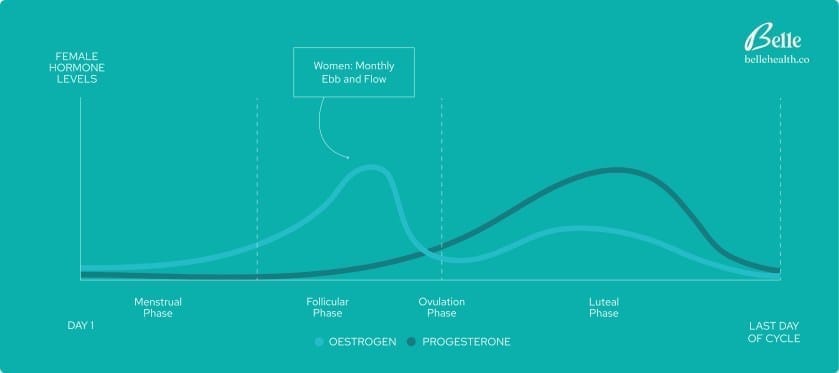
A graph illustrating the monthly ebb and flow of estrogen and progesterone levels during the four phases of the menstrual cycle, impacting mood and emotional health.
Phase 1: Menstrual Phase (Days 1–5)
Hormones: Estrogen & Progesterone (Lowest)
The first phase of the woman’s menstrual cycle is the menstrual phase, which begins on the first day of bleeding and typically lasts 3-7 days. During this time, estrogen and progesterone levels are at their lowest, which can lead to feelings of fatigue, low energy, and even sadness. Many women report feeling withdrawn or introspective during this time, as the body focuses its energy on the physical process of menstruation.
For some, this phase may bring relief, especially if they experience a buildup of emotional tension in the premenstrual period. Physically, it’s a time to rest and recover, and emotionally, it’s a good time for reflection and self-care.
How It Affects Your Mood
The sharp drop in estrogen and progesterone is what triggers menstruation, but it also leads to low serotonin levels—a neurotransmitter responsible for regulating mood, sleep, and appetite. As a result, many people feel emotionally low, fatigued, or irritable during this phase. You may also experience a heightened need for comfort, both physically and emotionally. These mood changes can also be compounded by physical symptoms such as cramping, headaches, and bloating.
Some people feel emotionally reflective or withdrawn during menstruation. This phase can prompt a desire to rest and retreat inward, allowing the body and mind to recover from the previous cycle.
Read more about this: Understanding Period Crying & Sleep Disturbances Before Period
Phase 2: Follicular Phase (Days 1–13)
Hormones: Estrogen (Rising)
Following menstruation, the follicular phase begins. This phase starts around day 7 of the menstrual cycle and lasts until ovulation. During this time, menstrual cycle hormones like estrogen start to rise, signaling the growth of follicles in the ovaries. The rise in estrogen is often associated with improved mood, increased energy, and heightened focus.
Emotionally, this phase can feel like a fresh start. Many women experience greater confidence, motivation, and optimism. This is a great time for planning and taking on new projects, as your mental and emotional state is primed for action.
How It Affects Your Mood
As estrogen levels increase, so does the production of serotonin. This leads to improved mood, motivation, and mental clarity. Many people report feeling more energized, optimistic, and sociable during the follicular phase. Estrogen has a stimulating effect on the brain’s emotional centers, contributing to increased confidence and a positive outlook. You may find yourself feeling more focused, productive, and eager to take on challenges, making this an ideal time for creative projects or social engagements.
Interestingly, the brain’s reward system, which is influenced by estrogen, may also enhance feelings of pleasure during this phase. This can translate to an increased interest in physical activity and social interactions. The growing energy and positivity often make this phase feel like a mental and emotional “springtime.”
However, some people may experience mood fluctuations during the early follicular phase, particularly if menstruation is accompanied by discomfort or heavy bleeding. As menstruation ends, though, mood generally improves as estrogen continues to rise.
Phase 3: Ovulation Phase (Days 14–16)
Hormones: Estrogen (Peaks), Testosterone (Rising)
The ovulation phase typically occurs around day 14 of the 4 menstrual phases and lasts 1-2 days. During ovulation, estrogen peaks, and testosterone also increases slightly. This hormonal surge often leads to feelings of high energy, confidence, and an increased desire to socialize.
This is the phase where many women feel their best—both physically and mentally. Your mood is likely at its peak, and you may feel more extroverted, attractive, and emotionally resilient. Biologically, this is when your body is most fertile, which could explain the boost in confidence and social interaction.
Read more about this: Why Am I So Emotional During Ovulation?
How It Affects Your Mood
The ovulation phase is often described as a time of emotional highs. Estrogen is at its peak, and testosterone provides a boost in energy, confidence, and sexual desire. Many people report feeling their most attractive, outgoing, and social during ovulation. You might feel more open to new experiences, eager to connect with others, and more playful or flirtatious.
This is also a time when emotional resilience tends to be at its strongest. Thanks to high levels of estrogen and the accompanying rise in serotonin and dopamine, positive emotions often dominate. You might feel more assertive and self-assured, qualities that are thought to be evolutionarily linked to an increased likelihood of reproduction.
However, for some, the hormonal surge can cause a degree of emotional sensitivity. The rapid rise and fall of hormones, especially estrogen, can trigger brief mood swings, irritability, or even anxiety for certain individuals. It’s important to note that not everyone experiences this emotional “high,” and for some, ovulation can be accompanied by mood dips.
Phase 4: Luteal Phase (Days 17–28)
Hormones: Progesterone (High), Estrogen (Declining)
After ovulation, the luteal phase begins, lasting from around day 15 to day 28 of the menstrual cycle. Progesterone rises during this time, while estrogen slowly declines. This hormonal shift can trigger mood swings, irritability, and even symptoms of PMS (premenstrual syndrome) for some women.
How It Affects Your Mood
The luteal phase is infamous for triggering premenstrual syndrome (PMS) in many people. As progesterone rises in the early luteal phase, it can initially have a calming effect, promoting relaxation and better sleep. However, as the phase progresses and both progesterone and estrogen begin to fall, many people experience significant emotional and physical symptoms.
This hormonal drop can lead to a decrease in serotonin levels, resulting in mood swings, irritability, anxiety, or sadness. The emotional rollercoaster during the late luteal phase is a hallmark of PMS, with some individuals also experiencing feelings of anger or frustration. Additionally, physical symptoms such as bloating, breast tenderness, headaches, and fatigue can intensify emotional discomfort.
Some people also report difficulty concentrating or a desire to withdraw from social activities during the luteal phase. Emotional sensitivity may peak, making it easier to feel overwhelmed or reactive to minor stressors. These mood shifts can range from mild irritability to more severe emotional challenges in the case of Premenstrual Dysphoric Disorder (PMDD), a more intense form of PMS.
While the luteal phase is often associated with emotional lows, it can also be a time for introspection and reflection. The body is preparing to shed its uterine lining, and this phase may be seen as a period of transition, where emotional energy turns inward.
The 4 Phases of the Menstrual Cycle and Moods in 2 Minutes
For a quick and easy overview, check out this video below, where it explains the 4 phases of the menstrual cycle and how they impact your mood.
This is your period in 2 minutes:
Final Thoughts
The menstrual cycle’s emotional landscape is deeply influenced by the ebb and flow of hormones like estrogen, progesterone, and serotonin. Each phase brings unique emotional experiences, from the energy and optimism of the follicular phase to the emotional sensitivity of the luteal phase. Understanding how these hormones affect your mood can help you anticipate emotional shifts and navigate them with greater awareness and compassion.
By recognizing the natural fluctuations in your mood throughout the menstrual cycle, you can embrace these changes as part of your body’s rhythm. Every person’s experience is unique, and while some may feel pronounced emotional effects, others may experience more subtle shifts. Tracking your cycle and identifying emotional patterns can empower you to manage your mental and emotional well-being with greater ease and confidence.
Read more about The Best Supplements for PMS Mood Swings