The 4 Phases of the Menstrual Cycle Explained
Learn the 4 phases of the menstrual cycle in order, how long a normal cycle lasts, symptoms in each phase, how the cycle can affect mental health, how to track your phases, and what irregular cycles may mean.
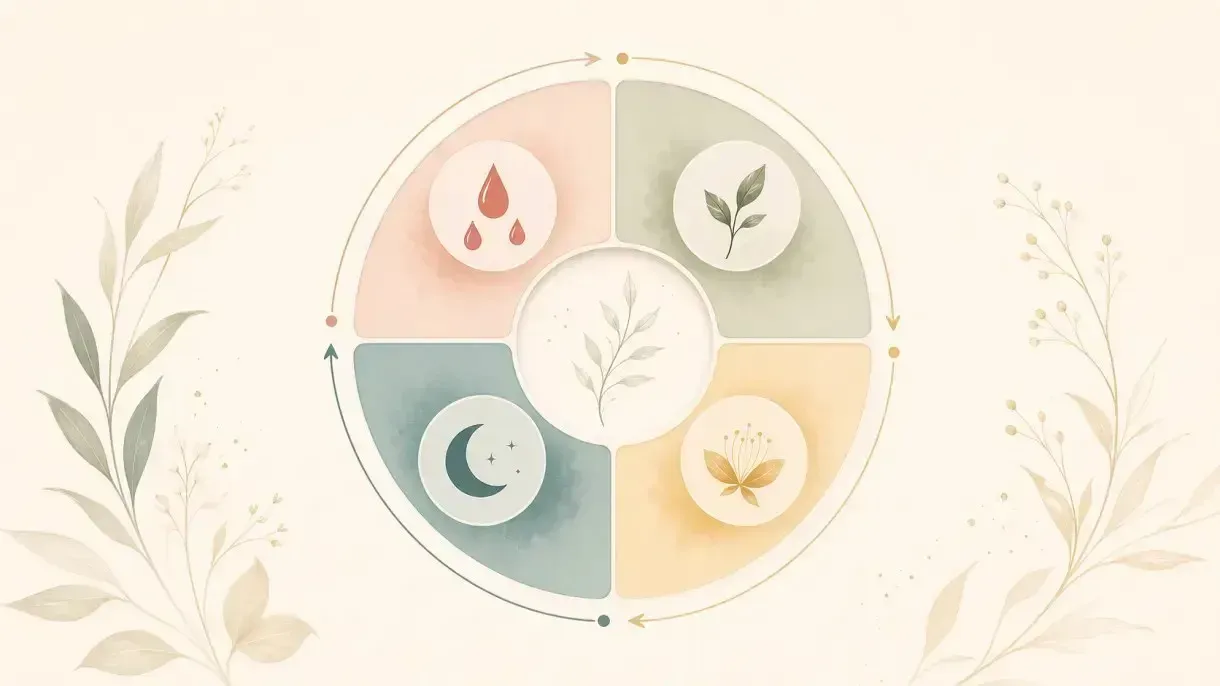
1- What Are the 4 Phases of the Menstrual Cycle?
Your menstrual cycle is more than just your period — and more than just a fertility timeline. It is a monthly hormonal rhythm that can influence bleeding, discharge, energy, mood, sleep, focus, appetite, and physical symptoms throughout the month. Yes, the cycle plays a role in reproduction, but for most of life it is also one of the clearest ways to understand how your body feels and functions over time.
The menstrual cycle is counted from the first day of one period to the first day of the next. It is usually described in 4 phases: menstrual, follicular, ovulation, and luteal. One important detail: the menstrual phase and follicular phase both begin on day 1, so they overlap.
1- Menstrual Phase
- Typical timing: Usually about 3-7 days.
- What happens: Estrogen and progesterone are at their lowest, and the uterine lining sheds through menstrual bleeding.
- What you may notice: Cramps, bleeding, fatigue, headaches, lower energy, and a stronger need for rest or recovery.
- Helpful next read: If energy shifts are a big part of your cycle, explore menstrual phases and energy levels.
2- Follicular Phase
- Typical timing: Starts on day 1 of your cycle and lasts until ovulation.
- What happens: Follicle-stimulating hormone (FSH) helps ovarian follicles grow, and estrogen gradually rises. The uterine lining begins rebuilding after your period.
- What you may notice: Bleeding tapers off, energy may rise, mental clarity can improve, and many women feel more motivated or outward-facing during this phase.
- Go deeper: Read more about what happens in the follicular phase.
3- Ovulation Phase
- Typical timing: Often around the middle of the cycle, but not always on day 14.
- What happens: A surge in luteinizing hormone (LH) triggers the release of an egg from the ovary.
- What you may notice: Clear, slippery cervical mucus, a small increase in libido, mild one-sided pelvic discomfort, and sometimes higher social or physical energy.
- Track the signs: Learn more about the physical signs of ovulation.
4- Luteal Phase
- Typical timing: Begins after ovulation and ends when your next period starts, often around 12-14 days.
- What happens: Progesterone becomes the dominant hormone. If pregnancy does not happen, progesterone and estrogen fall toward the end of this phase, which triggers menstruation.
- What you may notice: Bloating, breast tenderness, cravings, sleep changes, lower frustration tolerance, fatigue, anxiety, irritability, or other PMS-like symptoms.
- Go deeper: Learn what the luteal phase is and common luteal phase symptoms.
Want to understand these patterns in real life — not just in theory? The Belle App helps you track your period, symptoms, mood, sleep, and body signals so you can feel more in sync with your hormones.
2- How Long Is a Normal Menstrual Cycle?
A normal cycle does not have to be exactly 28 days. That is just a common example. In real life, healthy adult cycles vary, and many fall roughly in the 21-35 day range. Periods themselves often last around 3-7 days.
This matters because a lot of women assume something is wrong if ovulation is not on day 14 or if their cycle is not perfectly predictable. But cycle length can shift from month to month, especially with stress, travel, illness, poor sleep, postpartum changes, perimenopause, or hormonal conditions.
If cycle length is something you are trying to understand, you may also want to explore longer menstrual cycle patterns or use a monthly period cycle calculator as a starting point.
3- What Symptoms Might You Notice During Each Phase?
Every body is different, so symptoms will not look identical for everyone. But many women notice patterns like these:
- Menstrual phase: cramps, low energy, headaches, fatigue, heavier rest needs, or feeling more inward.
- Follicular phase: rising energy, better focus, improved motivation, and a sense of feeling more “back online.”
- Ovulation phase: more cervical mucus, mild ovulation pain, increased libido, and sometimes a more social or confident feeling.
- Luteal phase: bloating, cravings, breast tenderness, sleep changes, irritability, brain fog, anxiety, or lower emotional resilience.
If your biggest question is how the cycle affects your emotions, Belle has deeper reads on period phases and mood, a menstrual cycle mood swings chart, and period brain fog.
4- Can the Menstrual Cycle Affect Mood and Mental Health?
Yes. Hormonal shifts across the cycle can affect how you feel emotionally, mentally, and physically. Some women notice only subtle changes. Others feel clear differences in mood, energy, focus, stress tolerance, or symptom sensitivity at different times of the month.
That does not mean every emotion is “just hormones.” It means your cycle can be one useful layer of context. Some people feel more resilient in the follicular phase and more sensitive or overwhelmed in the late luteal phase. Existing concerns like low mood, anxiety, migraines, or brain fog may also feel worse at certain points in the cycle.
This is one reason Belle focuses on tracking more than just dates. When you log your mood, sleep, symptoms, and stress in context, patterns become easier to spot — and easier to respond to.
5- How Do I Track What Phase of My Cycle I’m In?
If you have ever wondered, “What phase am I in right now?”, the best answer comes from tracking a few signals together rather than relying on one estimated date.
- Start with day 1: Day 1 is the first day of full menstrual bleeding.
- Track your period: Note when bleeding starts, how long it lasts, how heavy it is, and whether cramps or clots show up.
- Watch cervical mucus: It often becomes clearer, stretchier, and more slippery as ovulation approaches.
- Notice ovulation clues: Some women use LH tests, ovulation pain, or basal body temperature.
- Track daily symptoms: Mood, energy, cravings, sleep, discharge, headaches, breast tenderness, and bloating can all help reveal your phase.
- Look for patterns over time: One cycle can be noisy. Two or three cycles often tell a much clearer story.
For a fuller guide, read how to track your menstrual cycle and cycle tracking and its health benefits. If you want a tool designed for more than just period prediction, learn how a menstrual cycle tracker like Belle can help connect your phase to how you actually feel.
6- What If Your Cycle Is Irregular?
An irregular cycle does not automatically mean something is wrong. Some variation is normal. But consistently unpredictable cycles can be worth paying attention to — especially if you are missing periods, bleeding very heavily, or struggling to tell when ovulation is happening.
Irregular cycles can be influenced by stress, poor sleep, big weight changes, starting or stopping birth control, puberty, perimenopause, PCOS, thyroid issues, and other hormone-related shifts.
If your cycle is irregular, calendar math becomes less useful and real-time body signals become more important. That is why Belle encourages tracking cervical mucus, basal body temperature, LH tests, and recurring symptoms — not just projected dates.
If this is your situation, start with irregular periods tracker and how to track ovulation with an irregular period.
7- How Do the 4 Phases Relate to PMS and PMDD?
This is where timing really matters. PMS and PMDD are not random symptoms that happen anywhere in the month. They usually show up after ovulation, during the luteal phase, and improve once menstruation begins.
Key points to understand:
- PMS usually begins in the luteal phase: Common symptoms include bloating, fatigue, irritability, food cravings, headaches, and mood changes.
- PMDD is more severe: PMDD can include intense anxiety, depression, irritability, hopelessness, or emotional distress that disrupts daily functioning.
- Timing is part of diagnosis: Tracking symptoms across at least two cycles can help show whether they follow a clear hormonal pattern.
- Relief often starts with the period: Many women feel symptoms ease once bleeding begins.
If emotional symptoms feel more severe than “normal PMS,” it may help to understand PME vs PMDD and talk with a healthcare professional.
8- Why Understanding the 4 Phases of the Menstrual Cycle Matters
Understanding your cycle helps you do much more than predict your next period. It can help you:
- recognize what is normal for your body and what has changed,
- understand recurring patterns in symptoms, energy, mood, and sleep,
- spot PMS or PMDD timing more clearly,
- track ovulation and fertile days if that matters to you, and
- make your routine more supportive of your body instead of feeling surprised by the same patterns every month.
At Belle, this is the real point of cycle awareness: not to make women obsess over every symptom, but to help them feel informed, supported, and more able to thrive in sync with their hormones.
When to Seek Medical Advice
Talk with a healthcare provider if you notice any of the following:
- cycles that are consistently shorter than 21 days or longer than 35 days,
- no period for 90 days when you are not pregnant,
- bleeding that lasts longer than 7 days or feels unusually heavy,
- bleeding between periods,
- severe pain that disrupts daily life, or
- emotional symptoms before your period that significantly affect work, relationships, sleep, or your sense of safety.
FAQs
What are the 4 phases of the menstrual cycle in order?
The 4 phases of the menstrual cycle in order are menstrual, follicular, ovulation, and luteal. One thing that often causes confusion is that the menstrual phase and the follicular phase both begin on day 1 of your cycle, so they overlap.
Is the menstrual cycle only important if I’m trying to get pregnant?
No. Your cycle is relevant whether or not pregnancy is on your radar. It can help you understand mood patterns, energy changes, sleep shifts, PMS timing, pain, discharge, and what is normal for your body from month to month.
How long is a normal menstrual cycle?
A normal menstrual cycle does not need to be exactly 28 days. Many healthy adult cycles fall roughly between 21 and 35 days, and your cycle can still be regular even if it varies a little from month to month.
How long does each phase of the menstrual cycle last?
Menstrual bleeding often lasts 3-7 days. The follicular phase varies the most from person to person. Ovulation is brief, but its surrounding signs may be noticeable for several days. The luteal phase often lasts around 12-14 days.
What symptoms are common in each phase of the menstrual cycle?
Many women notice lower energy and cramps during menstruation, rising energy in the follicular phase, more cervical mucus or libido around ovulation, and bloating, cravings, or irritability in the luteal phase. The pattern is personal, which is why tracking helps.
Can the menstrual cycle affect mental health?
How do I track my menstrual cycle phases?
Track the first day of your period, cycle length, bleeding, cervical mucus, ovulation clues, and daily symptoms such as mood, energy, cravings, sleep, and pain. For a step-by-step guide, read how to track your menstrual cycle.
What if my cycle is irregular?
Some irregularity is normal, but consistently unpredictable cycles deserve attention. Start by tracking real-time body signals such as cervical mucus, basal body temperature, LH tests, and symptoms. Belle also has a guide for tracking ovulation with an irregular period.
Is ovulation always on day 14?
No. Day 14 is only a rough example for a 28-day cycle. Real cycles vary, so ovulation can happen earlier or later depending on your personal timing.
Is Belle really a free period tracker with no subscription?
Yes! All period and ovulation tracking features are 100% free. Belle also includes science-backed tools for mood tracking, journaling, and emotional insights.
Does Belle sell my data?
Never. Belle follows a strict no data-sharing, no-tracking approach. Your health data stays on your device or encrypted in your account.