I Thought I Was Failing at Life — Until I Found the Name for My Pain
Living with undiagnosed PMDD nearly broke her. This is Praneet’s story of misdiagnosis, isolation, and finally being seen.
Through my teens, I did well in academics and actively pursued various activities with enthusiasm. I was full of life, driven by future goals, and mostly confident in everything I did. But something started shifting in my late teens and early twenties. My health began to change. I felt different—more sensitive, more emotional, as if something deep inside me was off.
Simple tasks became hard. My emotions became unpredictable. The spark I once had began to fade. I started having fights with friends, often had palpitations and anxiety. I thought maybe it was just a phase, something that would pass. So, I pushed through. I worked very hard, and when the opportunity came, I left for the U.S. to pursue higher education—still hopeful for a bright future. But instead of getting better, things only got worse, a new country, a new system, and the constant pressure to prove myself. While my peers were thriving, I was falling apart—fighting a battle no one could see, but one that consumed me every single day.
Living with undiagnosed PMDD while pursuing my degree as an international student was one of the hardest things I’ve ever faced. What once took me 15 minutes—writing a paper, reading a chapter—started taking days. There were times I couldn’t even write a simple 2-line email. I was drowning in exhaustion, missing classes, unable to get out of bed, and sleeping through the days. I was clinically depressed. And I was completely alone in it. I cried for hours over things I couldn’t explain. I shut out the world. I would put my phone on silent, unable to face the day. On better days, I got offers for jobs I had longed for. But the very next day, I would feel dysfunctional, like some invisible force had tied me down. Just getting out of bed felt impossible. I wasn’t doing a full-time job. I was dependent on my family in India. And with every passing month, I shrank in shame and guilt—feeling like I was becoming a burden. I was terrified of disappointing the people who had believed in me. I hated myself for not being strong enough. Many times, the thought of ending my life looked like the best thing I could do—not because I wanted to die, but because I just didn’t want to face my people. I didn’t feel like a normal human most days—let alone someone accomplished or successful.
I somehow completed my master’s, though what should’ve taken one and a half years took me four. Even when I got my work visa, I knew deep down—I couldn’t survive that life. I returned to India. Looking back, it was a blessing in disguise, because it gave me the space to rest. But even then, the saga continued.
My parents didn’t say anything directly, but their eyes were full of questions. I could see it—What happened to our bright, confident girl? What next? I started locking myself in my room for days to avoid seeing friends or relatives. I couldn’t tell them the truth: that I often didn’t feel alive on the inside. Depression, medications, therapy—I tried it all. But nothing explained why, after making some attempts, I would crash so badly. I was existing barely.
Then, after my marriage in 2010, the emotional chaos only got worse. I struggled to maintain relationships and feared I’d lose my marriage in the early years. In 2013, after countless doctors, endless blood tests, and no real answers, I stumbled upon something online: PMDD.
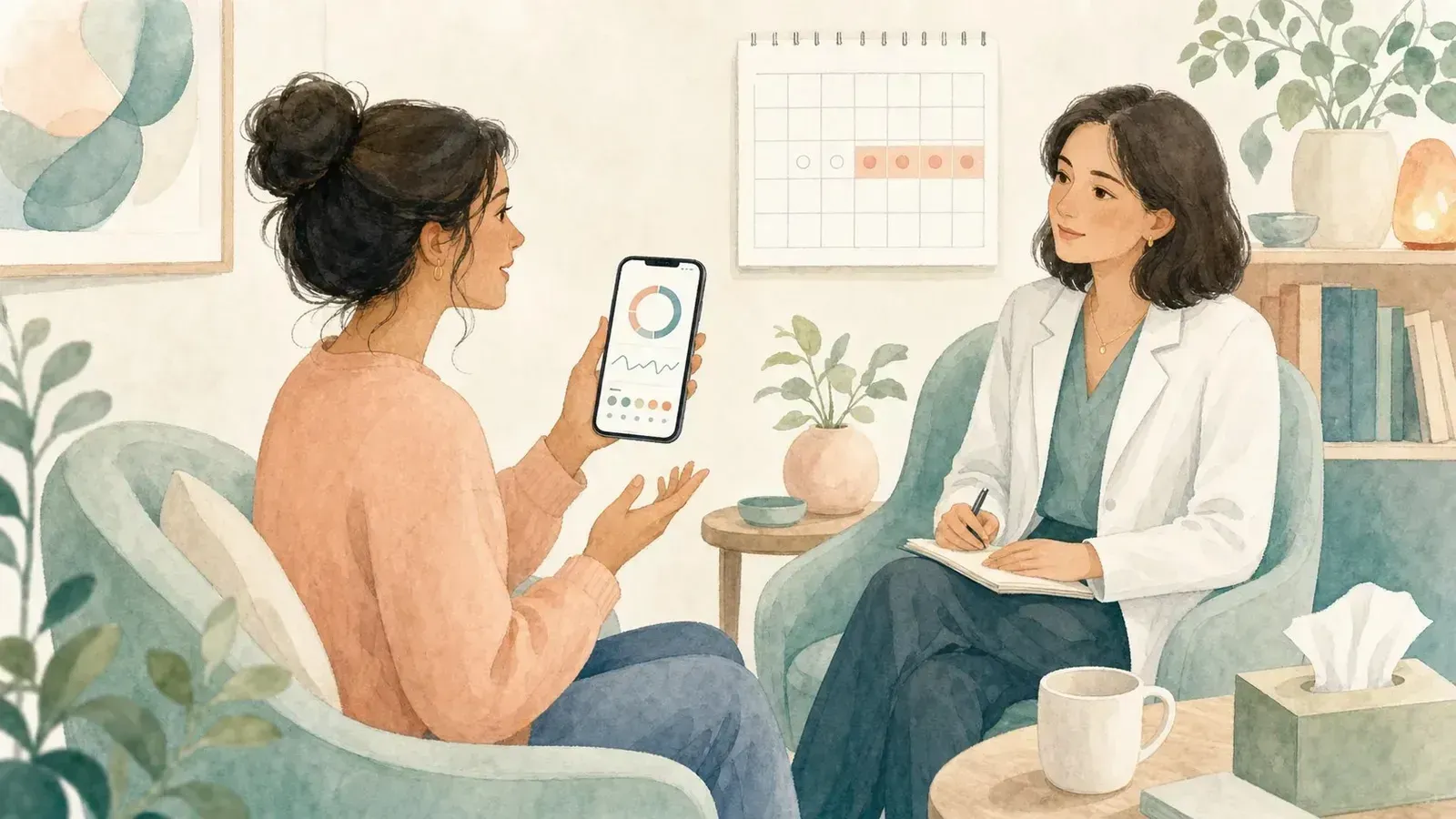
I started tracking my symptoms. I noticed how things would get worse during my luteal phase—how my world would fall apart in those days every month. I took my findings to my psychiatrist and, for the first time, someone looked at me and said, “Yes, this makes sense.” It was my eureka moment. Not because I had a cure—but because after years of living in confusion and shame, I finally had a name for my pain. I finally knew—it wasn’t my fault. I wasn’t weak.I wasn’t broken.
Getting diagnosed didn’t make the struggle disappear. But it changed everything. I stopped fighting my body and started working with it. On days I had energy, I poured myself into my work as a communication coach. I still work from home, part-time, and only on my good days. But I found purpose—even in the mess. Websites like IAMPD, support groups, and my husband helped me see I wasn’t alone. I learned to prepare for the emotional storm I now knew was coming. Most of all, I blame myself lesser.
Today, I still struggle. Some days are dark, heavy, and isolating. I still cry. I still lose days to fatigue, anxiety, and pain. I still sleep for days without looking at the day light. Life isn’t normal—not the kind people talk about. But I’ve come far.
And more than anything, I’ve learned that PMDD does not define me.
Life is still not easy. I’m still learning, still healing. But I’m here—and I’m grateful. Grateful to platforms like BelleHealth.co for giving women like me the courage and space to tell our stories.
Still healing, still hopeful- Praneet