

Are you looking for a holistic approach to hormone health? Seed cycling is a simple yet powerful nutritional practice that aligns with your menstrual phases. This guide will walk you through the science, benefits, and a practical seed cycling chart to help you get started. Discover how seeds like flax, pumpkin, sesame, and sunflower can support your hormone balance naturally.
What Is Seed Cycling?
Seed cycling involves consuming specific seeds during different phases of your menstrual cycle to support the natural fluctuations of estrogen and progesterone. This practice uses the nutrient profiles of seeds, such as lignans and essential fatty acids, to promote hormone regulation.
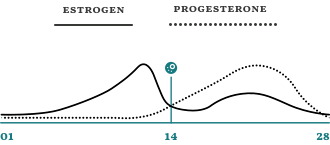
How Seed Cycling Works
The menstrual cycle has two primary phases:
-
Follicular Phase (Day 1 to Ovulation):
- Starts on the first day of menstruation.
- Dominated by estrogen production to prepare for ovulation.
-
Luteal Phase (Ovulation to the Start of the Next Period):
- Follows ovulation, with progesterone as the dominant hormone.
By aligning specific seeds with each phase, seed cycling aims to balance estrogen and progesterone levels.
For a deeper dive into seed cycling and its benefits, check out our comprehensive guide: Seed Cycling: Everything You Need to Know.
Seed Cycling Chart
| Phase | Cycle Days | Seeds | Key Benefits |
|---|---|---|---|
| Follicular Phase | Days 1–14 | Flax Seeds (1–2 tbsp/day) + Pumpkin Seeds (1–2 tbsp/day) | Flax seeds provide lignans to balance estrogen levels; pumpkin seeds offer zinc to prepare for progesterone production. |
| Luteal Phase | Days 15–28 | Sesame Seeds (1–2 tbsp/day) + Sunflower Seeds (1–2 tbsp/day) | Sesame seeds offer lignans to support hormone metabolism; sunflower seeds provide selenium for hormone detox. |
Why Use a Seed Cycling Chart?
A seed cycling chart serves as a helpful tool to track which seeds to consume based on your cycle phase. This ensures consistency and maximizes the benefits of seed cycling.


Your body gives signals—this ring helps you decode them
Benefits of Seed Cycling
- Hormone Regulation: Helps balance estrogen and progesterone levels.
- Reduces PMS Symptoms: Alleviates bloating, mood swings, and breast tenderness.
- Supports Fertility: Creates a healthier hormonal environment for conception.
- Improves Skin and Hair Health: Reduces hormonal acne and promotes collagen production.
- Helps Manage PCOS and Irregular Cycles: Anecdotal and emerging research shows improvements in hormone-related conditions like PCOS.
Key Ingredients in Seed Cycling
Flax Seeds for Hormone Balance
Flax seeds are rich in lignans, which have estrogen-modulating effects. They help bind and eliminate excess estrogen from the body, promoting balance. Research also shows that flax seeds can improve ovulatory cycles and progesterone levels in the luteal phase.
Pumpkin Seeds
Pumpkin seeds are a great source of zinc, which supports ovulation and the production of progesterone during the luteal phase. Zinc also aids in overall reproductive health.
Sunflower Seeds
High in vitamin E and selenium, sunflower seeds play a vital role in progesterone production. They also help detoxify the liver, which is essential for hormone metabolism.
Sesame Seeds
Like flax, sesame seeds are rich in lignans, supporting hormone metabolism. They also help regulate estrogen and testosterone levels.
Seed Cycling Before and After
Before Seed Cycling
Hormonal imbalances may manifest as:
- Irregular periods
- PMS symptoms (cramps, mood swings)
- Hormonal acne
- Fatigue
After Seed Cycling
With consistent seed cycling for 90 days, you may notice:
- Regular menstrual cycles
- Reduced PMS symptoms
- Improved energy levels and mood
- Clearer skin
How to Start Seed Cycling
- Identify the first day of your period (Day 1 of your cycle).
- Use the seed cycling chart to incorporate seeds into your meals:
- Follicular Phase: Flax seeds and pumpkin seeds.
- Luteal Phase: Sesame seeds and sunflower seeds.
- Grind seeds like flax and sesame for better absorption.
- Track your progress over three months for visible results.
Seed Cycling for Irregular Cycles
If you experience irregular cycles or are perimenopausal or postmenopausal, align your seed cycling with the lunar cycle:
- New Moon to Full Moon: Follicular phase seeds (flax and pumpkin).
- Full Moon to New Moon: Luteal phase seeds (sesame and sunflower).
Tips for Incorporating Seeds
- Smoothies: Blend seeds into your morning smoothie.
- Salads: Sprinkle seeds over your favorite salad.
- Oatmeal: Mix seeds into your breakfast bowl.
- Energy Balls: Create protein balls with your phase-specific seeds.
Does Seed Cycling Work?
Though research on seed cycling itself is limited, studies show the hormonal benefits of individual seeds like flax and sesame. Combined with anecdotal evidence, seed cycling is a promising practice for natural hormone balance.
Conclusion
Seed cycling is a natural, accessible way to support your hormone health. By following a seed cycling chart, you can align your nutrition with your menstrual phases, promoting balance and well-being. Whether you’re managing PMS, irregular cycles, or menopause symptoms, seed cycling offers a practical solution. Start today and experience the benefits firsthand!
References:
The Pharma Journal. (2023). Seed cycling: A nutritional approach to support menstrual and hormonal health. The Pharma Journal, 12(4), Part K. Retrieved from https://www.thepharmajournal.com/archives/2023/vol12issue4/PartK/12-3-684-508.pdf